Pages

Sunday, September 21, 2014

How and Why We Celebrated International Dot Day!

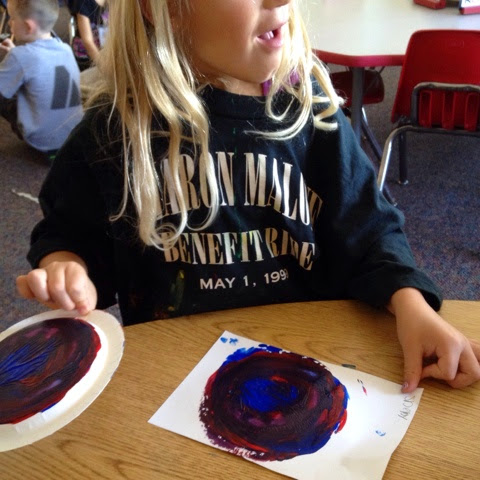
This past week we celebrated International Dot Day! It is a special day to celebrate creativity based on a precious book called "The Dot" by Peter Reynolds.


It has a great message for both children and teachers! It teaches children to celebrate their creativity and helps them build confidence in their own abilities!  It teaches us teachers how powerful our encouragement and our words can be!  We can use words to build them up or to criticize.  In this room we choose to build these precious children up!  This day was a day to show them that!  It also teaches me that the process of creating art is more important than the product! What the students create should not at all look the same as everyone else's creations! Nor should it look like what I think it should look like!  Where is the creativity if I direct what their art should look like!  Each one should be unique to the student who created it!


Here are some ways we celebrated our own unique creativity, made our marks, and saw where they took us!


Materials were set out for them to make their marks and see where they took them!  They had the freedom to use them however they choose!


Paint, brushes, paper plates, cotton swabs and corks...


created some beautiful dots!


Watercolor and oil pastels...


were used to create beautiful pieces of art.


Paint, paper tubes, swabs and corks created stunning pieces!


A large giant paper was layed on the easil for everyone to make marks on for a collaborative art piece.


Paper plates, primary colors and paper allowed for some color mixing experiments along with beautiful art!


Marks were also made in the library after children looked at the book with friends.


The writing center was also inspired by Peter Reynolds!


Even clay was inspired!


Of course, the children started finding dots all over our environment!


We had to display all of the beautiful creations around our room! Our room is now a "Dot Gallery!"


Ken Robinson once said, "Creativity is as important as literacy."  This was the first time that I had celebrated International Dot Day! It was wonderful, the children loved it, and it will be celebrated annually in room 201 to help children be confident about what they do in our room and hopefully carry that confidence out into the world!


Saturday, September 20, 2014

How Do My Students Learn With So Much Play? A Look Into My Journey Toward More Play-Based Learning

Why do we put so much focus on play here in room 201?  What are they learning? Will they learn the basics? I know these are questions some parents may have going through their minds!  In this post I will tell you why in my room, play is he most important part of the curriculum!

I start out by setting out materials and experiences that will foster curiosity, wonder, creativity, team work and problem solving.  I want to provide experiences where kids feel confident enough to take risks, make mistakes, learn from them and try again!  99% of my kids think mistakes are bad. I spend a lot of time telling them I hope they make a lot of mistakes in Kindergarten because that is how they learn!  This includes social mistakes also!  

It's not a matter of just having materials, but setting them up in inviting ways that will draw the children in.  At each area, I have to wonder...will this provide real, meaningful situations where math, reading and writing skills can be fostered and encouraged?  What equally important 21st Century Skills (teamwork, problem solving,critical thinking, creativity) will be fostered and encouraged? Where might kids take this?  It takes a lot of planning and time to set up a room full of experiences to foster all of this and to change them as the year goes on. 

Here are just a few examples of learning situations that have happened in our room this week all through play!

Critical thinking as they come up with a design, problem solving as they figure out what to add next, team work as they discuss what would be the best next move, respect as some others were allowed to play with the environments that were created without destroying what someone else worked hard to make. 


Counting with one to one correspondence, measurement, comparing lengths, critical thinking, persistence, problem solving and handling frustration as they explored balance. 


Patterning with loose parts all over the room!


The concept of "equal" meaning "the same" has been explored and discussed as a class through the creations below. 
When I projected this on our promethium board during sharing time, they realized that if the red group had six, they didn't need to count the others since they could tell by looking that they were all equal.


Observational, reading and writing skills were practiced at our "look closer" table. 

Below is an observational drawing of our praying mantis. We worked together to figure out the "p" and "m" that we heard in praying mantis. 

This friend put an S for sparkle because she observed the sparkles in the rock.


This friend wondered what the spots on the pumpkin were. 


This friend knew how to make the "I" when he wanted to write "I wonder" but wanted to dictate the rest. I took that opportunity to model sounding out the words as I wrote and had him help me figure out some of the letter sounds. 


This friend wrote the color of each table and the names of each friend that sat at each table!


Kids are creating web maps about their friends, imitating what we do whole class each day as we get to know the "special friend of the day."


Measurement using both non-standard and standard units, and comparing lengths. The concept of "half" came up when they discovered this long unifix cube trail was 3 1/2 friends long!

Showing how many, counting and one to one correspondence. 

Do we have whole group instruction? Yes!  We have a time for focused instruction for reading, writing/drawing, and math!  When they are better at working independently, I will pull out small groups to work on skills specific to their needs.  But the most important parts of our school day are when they can take what they are learning during focused instruction and apply it to the real life situations that happen here in our room as they are being active learners and outside of our room in their own homes and lives. 

Saturday, September 13, 2014

How Do I Figure Out What Students Want To Investigate?

How do I come up with the inquiry ideas we have done? It all comes from the kids and what they are interested in.  But how do I figure out what they are interested in?  It is more than just asking!  Here is how I do it!

I started out the year by setting up areas for play and what we call "Provocations." Provocations are different from "Centers" in that I do not provide any specific instructions on how the students are to use the materials, only on how to take care of the materials. Some are literacy or math related, some are on trays, but most are items that I set out along with materials to encourage the use of math and literacy skills.  You can take a look at some of my beginning provocations and areas of play in my August post here: http://mrsmyerskindergarten.blogspot.com/2014/08/welcome-to-new-year-of-kindergarten.html .  I have many areas where I set up areas of play and provocations which change through the year. I also read a variety of books that may spark an interest, or a student may bring something from home that sparks interest!

This year was hard! They explored all the items but didn't get excited or hyped up about them. I found this guy and thought he may spark some interest...

But he did not!  They thought he was cool, but didn't start wondering or asking questions. Then a friend brought in this beautiful nest with these teeny eggs.  I thought that might spark some interest!


But the same thing happened. They initially thought it was great, but didn't wonder or show they wanted to take it further!  Then I started noticing some trends in their play!

A lot of experimenting with balance....


I also noticed a ton of experimenting and excitement in the measuring area...


Measurement and balance came together in the Lego area with the creation of this balance scale...


Also a lot of exploration with Symmetry...


and patterns!


So now I have to figure out what to do with this information!  What could incorporate balance, measurement, symmetry, and patterns?  I'm thinking maybe something along he lines of a bridge inquiry? Our playground could use a bridge! That would be a great project! Or maybe a structure inquiry where we could investigate how different structures are built?  I have never explored these concepts in the past so I will continue observing and then start planning! That will take some time so meanwhile I am going to set out some color and fall provocations for them to explore and investigate while I dig deeper into these concepts and integrate the Common Core Standards! 

Through the fall and color provocations we will focus on "making our learning visable" or "showing our thinking" through documentation and observational drawings using new and beautiful materials!  

I can't wait to see what inquiries, investigations and projects this year will bring!